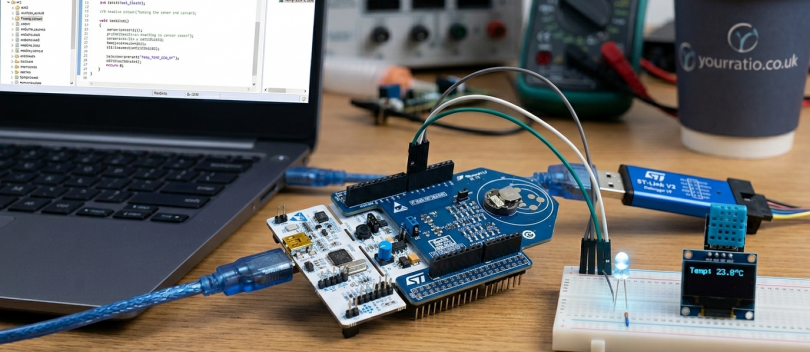
Overview Most people don’t set out to become an embedded systems engineer from day one. They arrive there gradually. It might start with writing software, working with hardware, or building simple projects. Then at some point, you realise you’re dealing with systems where software interacts directly with the physical world. Timing matters. Memory matters. Behaviour
Overview At some point, most people working in embedded systems run into the same question: Should I use Arduino, or should I move to STM32? It usually doesn’t come up at the very beginning. Arduino is often where people start. You can connect a few components, write some simple code, and get a working system
Overview For many engineers moving into embedded systems, there comes a point where Arduino starts to feel limiting. It’s useful for getting started. It hides a lot of complexity. You can get something working quickly. But at some stage, you need more control over how the system behaves. You need better performance, more peripherals, tighter
Overview When developers move into embedded systems, one of the first things they encounter is that Embedded C programming looks familiar on the surface, but behaves very differently in practice. The syntax is the same. The language is the same. But the environment isn’t. You’re no longer writing code that runs on top of an
Overview When people first come across embedded programming, it’s rarely through a formal definition or structured course. It usually happens when they start working on a system that behaves differently from what they are used to in general software development. In traditional software environments, issues can often be isolated quickly. There is access to logs,